
Luxury vinyl plank install in Service tab for spaces requiring moisture resistance without sacrificing authentic wood-grain appearance
Luxury vinyl plank withstands standing water, temperature fluctuations, and heavy impacts that would damage hardwood or laminate flooring. The material layers a photographic wood-grain image between a rigid core and a urethane wear layer, creating a product that installs over most existing substrates without extensive preparation. FloorGem Services, Inc. handles luxury vinyl plank install in Service tab using floating floor and glue down floor methods depending on whether your planks feature click-lock edges or require adhesive bonding. Floating installations interlock planks without attaching them to the subfloor, while glue down methods secure vinyl directly to the substrate for commercial-grade stability.
Click-lock floating floors install quickly over concrete, tile, or existing vinyl without adhesives or fasteners, relying on tongue-and-groove edges that snap together under angled pressure. Glue down luxury vinyl plank uses pressure-sensitive or wet-set adhesives spread across the subfloor, bonding each plank firmly to prevent shifting in high-traffic areas or spaces with rolling loads from carts or office chairs.
Schedule a substrate assessment to identify which installation method works with your current flooring and traffic patterns.
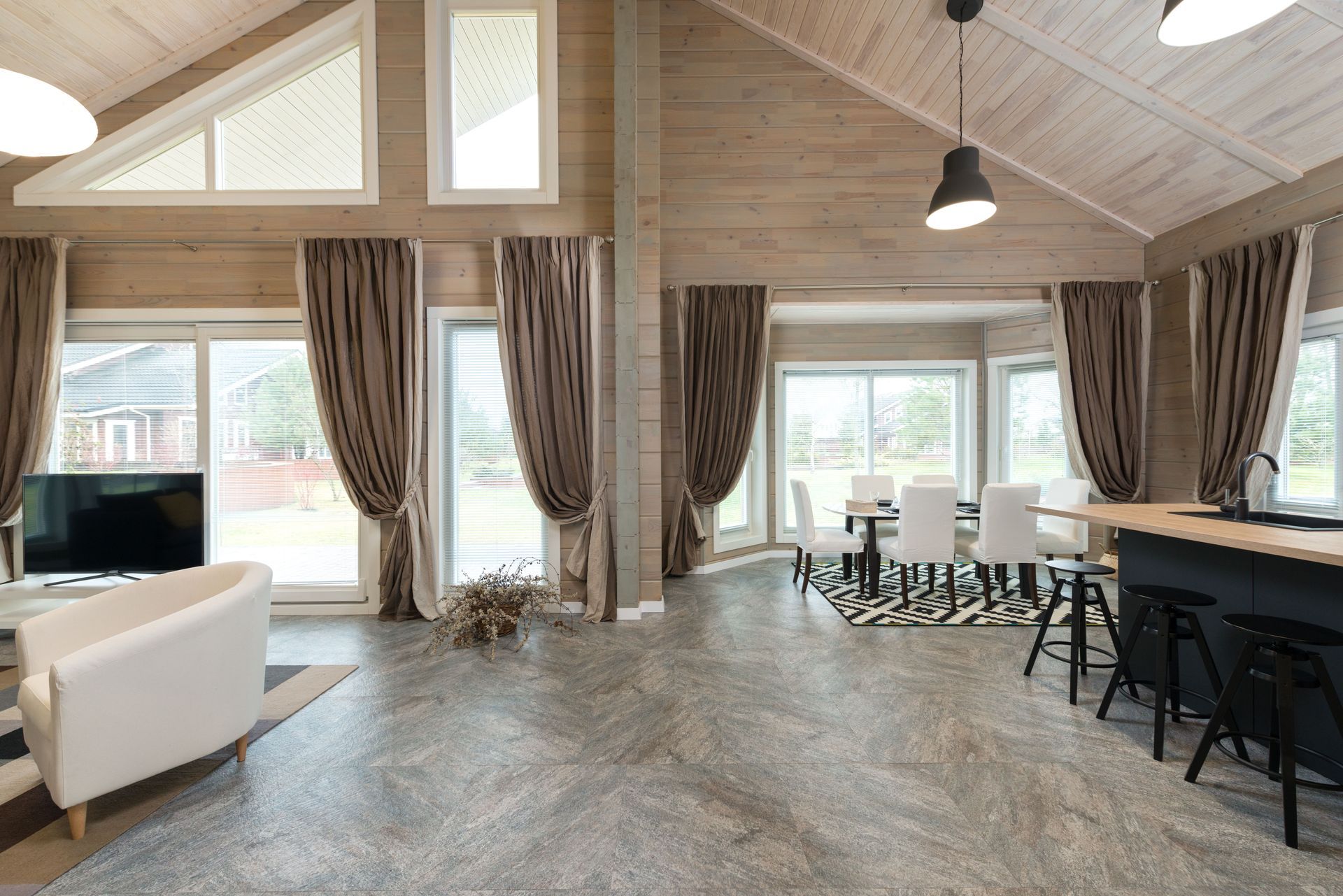
The Difference Between Floating and Glue Down Installation
Floating floor installation requires subfloors level within three-sixteenths of an inch over ten feet, with high spots ground down and low areas filled using floor patch compound. The planks click together row by row, floating as a single unit over underlayment that dampens sound and smooths minor substrate imperfections. Glue down installation demands flatter tolerances within one-sixteenth of an inch since adhesive won't bridge gaps, requiring more intensive subfloor prep but delivering a floor that feels more solid underfoot with zero hollow sound when walked on.
After installation completes, you notice the photographic grain pattern creates consistent wood appearance without the color variation found in natural hardwood. Floating luxury vinyl plank may produce slight movement underfoot in the center of large rooms where the floor isn't restrained by walls, while glue down installations feel rigid with no deflection. Both methods result in waterproof surfaces that handle spills without staining or swelling, making them suitable for kitchens, bathrooms, and basements where hardwood would fail.
Installation covers underlayment for floating floors, adhesive for glue down methods, and transition strips at doorways and material changes. It does not include removing existing flooring unless that material creates height or bonding issues, subfloor structural repairs, or baseboards and shoe molding, which you reinstall after flooring is complete.
Common Questions About This Service
Installation choices depend on subfloor conditions, room size, and whether you prioritize installation speed or maximum stability.
- What determines whether floating or glue down installation works better for luxury vinyl plank? Floating installation works on any substrate smooth enough to prevent underlayment puncture, installs in half the time, and allows floor removal if you relocate or want to change flooring later. Glue down installation provides a more permanent floor that resists lateral movement in commercial spaces or rooms larger than five hundred square feet where floating floors may shift over time.
- How does luxury vinyl plank perform in Service tab temperature extremes? Luxury vinyl plank remains dimensionally stable in temperatures from minus ten to one hundred twenty degrees Fahrenheit without expanding or contracting like hardwood. The material works in uninsulated spaces, sunrooms, and enclosed porches where temperature swings would cause hardwood to gap or buckle throughout seasonal changes.
- What thickness of luxury vinyl plank resists denting from furniture and dropped objects? Planks between five and eight millimeters thick with rigid SPC (stone plastic composite) or WPC (wood plastic composite) cores resist denting from furniture legs and dropped objects better than thinner products. The wear layer thickness, measured in mils, determines scratch resistance—twenty-mil wear layers suit residential spaces, while commercial installations require twenty-eight to thirty-mil protection.
- Why does glue down luxury vinyl plank cost more than floating installation? Glue down installation requires adhesive coverage across the entire subfloor, precise trowel technique to prevent excess squeeze-out between planks, and longer working time as adhesive sets. Floating floors snap together without adhesive, reducing material costs and labor hours by forty to fifty percent compared to glue down methods.
- When should I avoid floating luxury vinyl plank and choose glue down instead? Floating installation is not recommended in rooms larger than fifteen hundred square feet without expansion breaks, commercial spaces with pallet jacks or heavy rolling equipment, or areas where the floor transitions to multiple adjoining rooms without threshold containment. Glue down installation prevents the lateral creep and edge lifting that occurs when floating floors lack perimeter restraint in oversized or irregularly shaped spaces.
FloorGem Services, Inc. evaluates substrate conditions and room dimensions to recommend the installation method that delivers the performance your space requires. Request a site visit to review luxury vinyl plank options and receive a detailed installation proposal based on your existing flooring and usage patterns.
